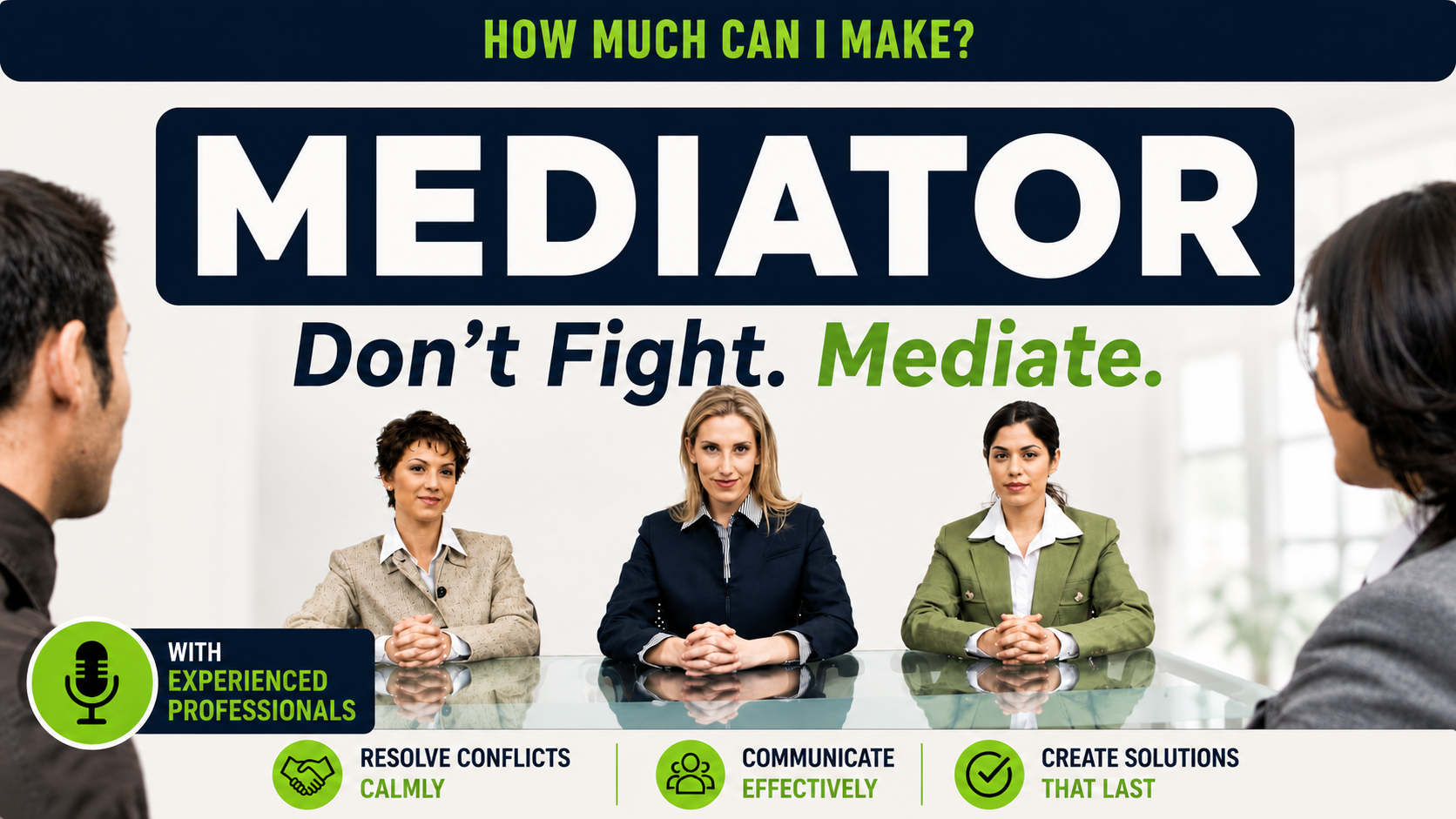
Divorce court is expensive, slow, and brutal. Mediation is none of those things — and it’s a growing career. New York mediator Alison Block Gerson breaks down both sides of the table.
WHAT YOU’LL LEARN IN THIS EPISODE
- How divorce mediation actually works — step by step
- What mediators charge per hour (and what clients actually pay)
- How it compares to going to court on cost, time, and stress
- How to become a mediator — training, certification & career path
- Real income numbers from someone doing it full time
HOW MUCH DO DIVORCE MEDIATORS MAKE?
Income scales with experience and market:
- Starting out: $50,000 – $75,000
- Established practice: $75,000 – $150,000
- High-demand markets: $150,000 – $200,000+
- Hourly rate: $150 – $400/hr
- Court-appointed: $45,000 – $75,000
You may also like:
Bankruptcy Attorney – helping people get a fresh start →
Financial advisor – get your finance in order →
FAQs
Q: Do I need a law degree to become a mediator? A: No. Many mediators come from social work, psychology, or counseling backgrounds. Certification training typically runs 40–60 hours.
Q: How long does divorce mediation take? A: Most cases resolve in 3–6 sessions over a few weeks — compared to 1–3 years in court.
Q: Is mediation legally binding? A: Yes — once both parties sign the agreement, it becomes a legally enforceable contract.
Q: Can mediation work if the divorce is hostile? A: Yes, in many cases. A skilled mediator is trained to de-escalate and facilitate even high-conflict situations.
Q: Does mediation cover child custody? A: Absolutely — custody, visitation, and child support are among the most common issues resolved through mediation.
Q: What’s the difference between a mediator and a divorce attorney? A: An attorney represents one side. A mediator is neutral and helps both parties reach their own agreement — often at a fraction of the cost.
Q: How do mediators find clients? A: Referrals from family law attorneys, therapists, financial planners, and word of mouth are the primary sources.
KEY TAKEAWAY
Mediation isn’t just cheaper and faster than court — it gives people control over one of the hardest moments of their lives. For professionals who want meaningful work at the crossroads of law, psychology, and human conflict, it’s one of the most underrated careers out there.