
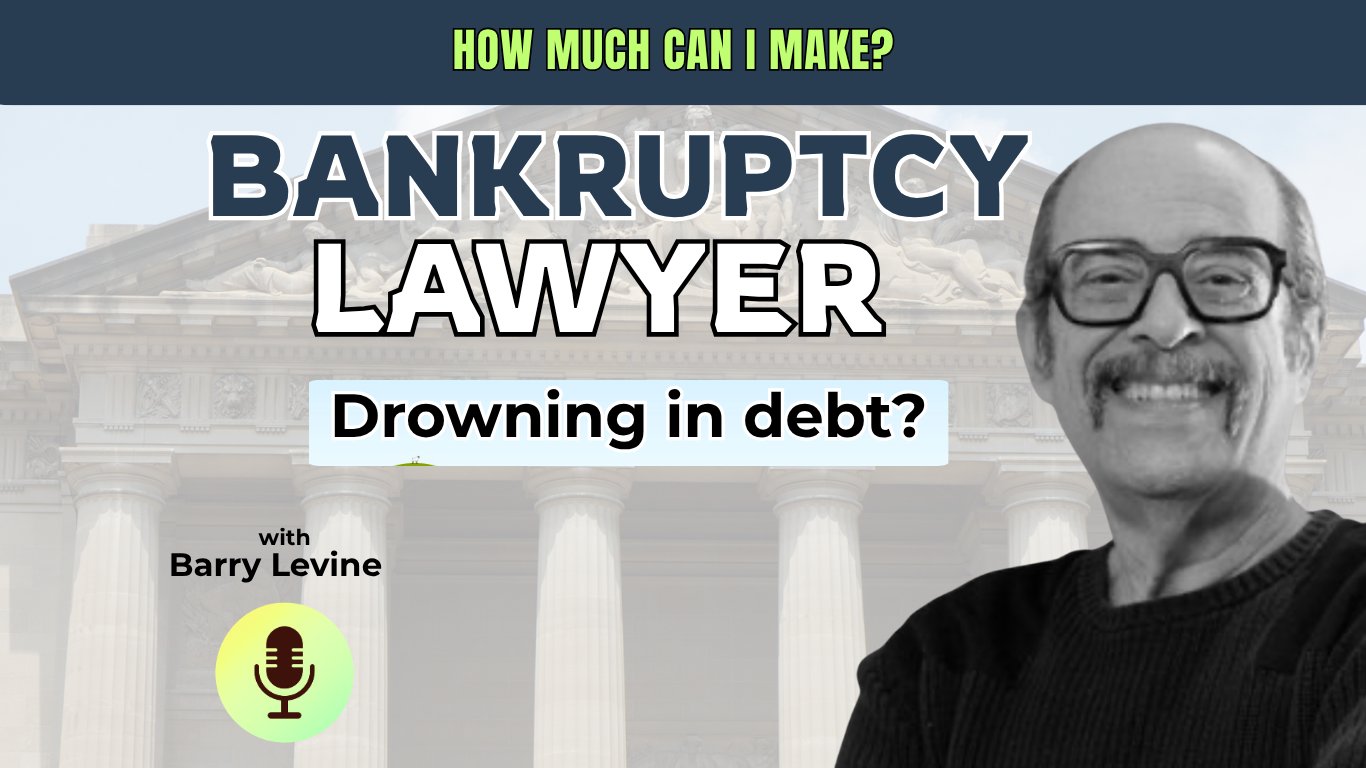
Bankruptcy Lawyer Career: Salary, Cases & What the Job Really Looks Like
$70K – $200K+
2/9/26
Attorney Barry Levine breaks down how bankruptcy law works and how lawyers build income in this field. he explains Chapter 7 and Chapter 13 bankruptcy, this episode offers real-world look at the work, the earning potential, and the role lawyers play in helping people get a financial fresh start including compilations with bitcoin assets.
What you’ll learn in this episode:
- How to become a bankruptcy lawyer
- The difference between Chapter 7 and Chapter 13
- What bankruptcy attorneys actually do day to day
- How lawyers get paid (per case vs salary)
- How much you can earn in this field
- What it takes to build a client pipeline
How much can you earn?
- Bankruptcy lawyers: $90K–$150K
- Experienced / partners: $200K–$300K+
- Per case fees: $1K–$3.5K+
- Paralegals: $50K–$75K
Income often depends on caseload—more clients, more earnings.
YOU MAY ALSO LIKE THESE EPISODES:
Looking for stable, high-demand job – operating room nurse →
Thinking of a career change? Reinvention →
FAQ
For People Considering Bankruptcy
Q: What is the difference between Chapter 7 and Chapter 13 bankruptcy? A: Chapter 7 wipes out most unsecured debt quickly (3–6 months) but may require liquidating assets. Chapter 13 lets you keep assets while repaying debts over 3–5 years through a structured plan.
Q: Will bankruptcy ruin my credit forever? A: No — Chapter 7 stays on your credit report for 10 years, Chapter 13 for 7. Most people begin rebuilding credit within 1–2 years of filing.
Q: What debts can bankruptcy actually erase? A: Credit card debt, medical bills, and personal loans can typically be discharged. Student loans, alimony, child support, and most tax debts generally cannot.
Q: How much does it cost to file for bankruptcy? A: Court filing fees run $300–$350. Attorney fees typically range from $1,500 for a simple Chapter 7 to $3,500+ for Chapter 13.
Q: Can I keep my house if I file for bankruptcy? A: Often yes — especially under Chapter 13. Chapter 7 may allow you to keep your home if you’re current on payments and your equity falls within your state’s exemption limit.
Q: How long does bankruptcy take? A: Chapter 7 is typically resolved in 3–6 months. Chapter 13 takes 3–5 years since it involves a repayment plan.
Q: Should I hire a bankruptcy lawyer or file on my own? A: While self-filing is possible, mistakes are costly. A bankruptcy lawyer ensures paperwork is correct, protects your assets, and significantly improves your outcome.
For People Interested in the Career
Q: How much does a bankruptcy lawyer make? A: Salaries range from $70,000 for associates at small firms to $200,000+ for experienced attorneys at larger practices or those running their own firm.
Q: Is bankruptcy law a good career? A: Yes — it’s recession-proof by nature. Demand for bankruptcy lawyers actually increases during economic downturns, making it one of the more stable legal specialties.
Q: How do you become a bankruptcy lawyer? A: You need a law degree (JD), pass the bar exam, and typically gain experience at a firm handling bankruptcy cases. Some attorneys also earn a board certification in bankruptcy law.
Q: Is bankruptcy law emotionally difficult? A: It can be — clients are often stressed and financially desperate. But many bankruptcy lawyers find the work deeply rewarding since they’re helping people get a genuine fresh start.
Q: What is the day-to-day life of a bankruptcy lawyer like? A: It involves meeting with distressed clients, filing court documents, attending hearings, negotiating with creditors, and guiding clients through what is often one of the hardest periods of their lives.